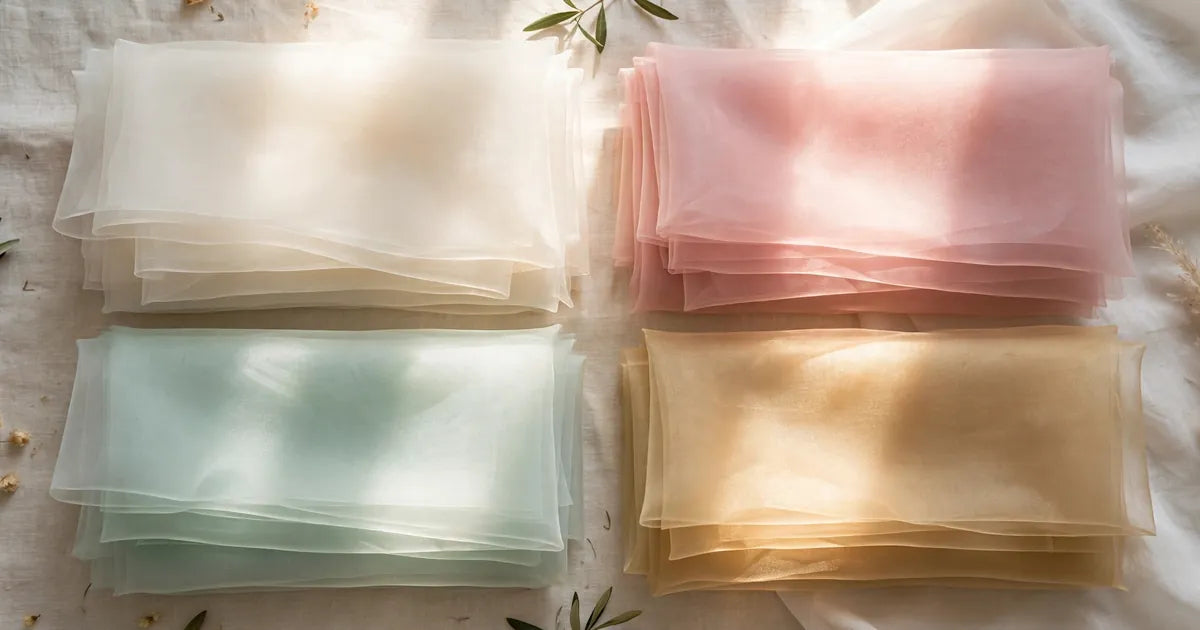
Organza fabric is behind many of the lightest, prettiest formal outfits in Pakistan. You see it as a sheer dupatta over a plain silk suit, as a voluminous lehenga skirt that holds its shape, and as a softly embroidered shirt that looks dressed up without feeling heavy. It catches the light, it holds a shape, and it makes a simple outfit look formal in a way that lawn or cotton cannot.
But organza confuses many buyers, because the same word covers very different fabrics. Some organza is made from silk, some from polyester, and some is a blend. Some is plain and crisp, some is embroidered all over, and some is so sheer it must be lined. This guide explains, in plain words, what organza fabric is, what organza fabric is made of, how to tell silk organza from polyester organza, how to style it, sew it, wash it, and buy it, so you can choose with confidence.
Contents
- What is organza fabric?
- Key takeaways
- What is organza fabric made of?
- Types of organza fabric
- Organza vs chiffon, net, and georgette
- How to style organza fabric
- Sewing with organza: what to know before you stitch
- How to wash and care for organza fabric
- Buying guide: how to check organza before you pay
- Formal suits to pair with an organza dupatta
- Frequently asked questions
- Conclusion
What is organza fabric?
Organza is a sheer, lightweight fabric that holds its shape. It is made from fine, tightly twisted yarn, in silk or polyester, woven in a plain weave. It looks formal, feels crisp, and lets light through, which is why it suits dupattas, formal shirts, and lehengas. Always line an organza shirt or skirt, because one layer is see-through.
Layers of organza together look soft and full, while a single layer lets light through, which is why organza suits wedding wear, formal dupattas, and lehengas so well.
A real organza fabric feels crisp in the hand, almost like paper, but it is not rough. Hold it up, and you can see light and colour through it. Fold it, and it springs back instead of falling flat. That crispness is the first sign of organza, and it is what sets it apart from chiffon, which drapes and flows, and from net, which has open holes you can see clearly.
Key takeaways
- Organza is sheer, light, and crisp, and it holds its shape instead of draping like chiffon.
- Silk organza is softer, shinier, and more breathable, while polyester organza is stiffer, cheaper, and easier to wash.
- Always line an organza shirt or skirt, or wear it over a lining, because a single layer is see-through.
- An organza dupatta is the easiest way to wear organza: it adds formality without a full organza outfit.
- Wash organza gently, by hand or on a gentle cycle in cold water, and never wring it hard.
What is organza fabric made of?
Traditionally, organza was made from silk. Silk organza is woven from fine silk yarn, tightly twisted, which gives it a soft shine, a smooth feel, and a crispness that softens a little with wear. It breathes well, which matters in warm weather, and it takes dye beautifully, so silk organza comes in rich, deep colours. It is also the most delicate kind, and the most expensive, because silk itself costs more and the weaving is fine work.

Today, most organza you meet in a market is made from polyester, or from a polyester blend. Polyester organza looks very similar at first: it is sheer, crisp, and shiny, and it holds its shape well, sometimes even better than silk. It is stronger, it wrinkles less, and it washes more easily. Its weakness is breathability. On a hot day, polyester organza can feel warm and close, where silk organza feels cooler against the skin.
A third kind, nylon organza, is lighter and softer than polyester, but it is less common in Pakistani markets, and it can lose its crispness with heat. Blends, like silk and polyester mixed, try to take the best of both: some of silk's softness and shine, with some of polyester's strength and easy care. When you buy, the label, and the seller's plain answer, matter more than the word organza alone. Ask what the organza is made of, in plain words, before you pay.
Types of organza fabric
Not all organza is the same, and the type changes how it looks, how it feels, and how you should use it. The table below covers the kinds you are most likely to meet.

| Type | Made of | Feel and look | Best for |
|---|---|---|---|
| Silk organza | Silk yarn, tightly twisted | Soft shine, crisp but gentle, breathes well | Bridal wear, formal shirts, fine dupattas |
| Polyester organza | Polyester yarn | Very crisp, strong, shiny, holds shape | Daily formal wear, lehengas, decoration |
| Crystal organza | Fine polyester, very sheer | Extra sheer, light sparkle, very crisp | Layered skirts, overlays, dupattas |
| Embroidered organza | Silk or polyester base, with embroidery | Patterned, dressier, heavier where embroidered | Wedding shirts, formal dupattas, lehengas |
| Printed organza | Silk or polyester base, with print | Colourful pattern, lighter than embroidery | Summer formal shirts, dupattas, sarees |
Embroidered organza deserves a special note. The embroidery can be thread work, sequins, or mirror work, and it changes the fabric. A heavily embroidered organza is heavier, it drapes less, and it needs gentler washing, because the embroidery can catch and pull. A lightly embroidered organza, with work only on the border or the neck, keeps most of organza's lightness, and is easier to wear every day.
Organza vs chiffon, net, and georgette
Organza is often mixed up with three other sheer fabrics, and the difference matters when you choose an outfit. Chiffon is sheer and light like organza, but it drapes and flows, where organza stands and holds a shape. A chiffon dupatta falls softly over the shoulder. An organza dupatta holds a gentle puff and shape, and stays where you put it.

Net is easier to tell apart. Net has open, visible holes in a regular pattern, like a fine mesh, while organza is a closed weave, smooth to the eye, even though light passes through it. Georgette sits between the two: it is sheer and light, it drapes more than organza but less than chiffon, and it has a slightly grainy, matte feel, where organza is smooth and shiny.
| Fabric | Sheerness | Drape | Feel | Best for |
|---|---|---|---|---|
| Organza | High, see-through in one layer | Stiff, holds shape | Crisp, smooth, shiny | Formal shirts, lehengas, dupattas |
| Chiffon | High, see-through in one layer | Flows, falls softly | Soft, smooth, flowing | Dupattas, flowing shirts, sarees |
| Net | Open mesh, clearly visible holes | Soft, falls in folds | Mesh-like, light | Veils, layered skirts, overlays |
| Georgette | Medium to high | Drapes, with some body | Slightly grainy, matte | Shirts, sarees, daily formal wear |
How to style organza fabric
The easiest way to wear organza is as a dupatta. An organza dupatta over a plain silk or linen suit adds formality at once, without the heat or the care of a full organza outfit. Choose a plain suit in a colour that matches, or contrasts softly with, the dupatta, and let the dupatta be the star. A lightly embroidered organza dupatta suits a wedding, while a plain organza dupatta suits a dinner or a formal day out.

A full organza shirt needs a lining, and the lining colour changes the look. A lining in the same colour keeps the outfit soft and even. A lining in a contrasting colour shows through the sheer organza and creates a layered, two-tone effect, which suits a festive look. For a lehenga, organza is used for the skirt, often over a stiffer inner layer, because organza alone holds a beautiful, full shape that photographs well and moves lightly when you walk.
For a wedding guest, organza is a safe, dressy choice, as long as the outfit is not brighter or heavier than the bride's. A plain or lightly embroidered organza shirt, with a simple dupatta and light jewellery, looks formal without competing. For daily wear, organza is best in small amounts: a dupatta, a sleeve panel, or a light overlay, rather than a full outfit, because a full organza outfit needs more care and is less comfortable for a long, busy day.
Sewing with organza: what to know before you stitch
Organza is beautiful, but it is not the easiest fabric to sew, and a few plain tips save a lot of trouble. First, always use a lining, or a slip underneath, because organza is see-through and a raw edge shows through it. Second, cut carefully, because organza slips on the table. Lay it on a cotton cloth, or pin it well, and cut with sharp scissors, in one smooth motion, so the edge stays clean.

Third, use a fine, sharp needle, and a short stitch, because a heavy needle leaves visible holes in a sheer weave. Fourth, finish every seam, because organza frays easily. A narrow rolled hem, or a French seam, where the raw edge is folded inside itself, looks neat and lasts longer than a raw, overlocked edge that shows through the fabric. Fifth, press gently, with low to medium heat, and a pressing cloth between the iron and the organza, because high heat can melt polyester organza and mark silk organza.
Tell your tailor these points in plain words: lining in the same colour, or a contrasting lining if you want the two-tone look, French seams or rolled hems, and gentle pressing. A tailor who has sewn organza before will know these steps, and a tailor who has not will thank you for saying them clearly.
How to wash and care for organza fabric
Organza fabric care depends on what it is made of, so check the label first. Silk organza should be hand washed in cold water, with a mild soap, or dry cleaned if the label says so. Soak it briefly, press the water through softly, and never wring or rub it hard, because that creases the crisp weave and can pull embroidery.

Rinse in cold water, press out the water in a clean towel, and dry it flat in the shade, away from direct sun and heat.
Polyester organza is easier. It can usually be machine washed on a gentle cycle, in cold water, inside a mesh laundry bag, which protects it from catching on other clothes. Do not use hot water, bleach, or a hot dryer on either kind, because heat damages the crisp finish, and on polyester it can melt the fibres slightly and leave a shine mark.
Iron organza on low to medium heat, from the back, with a pressing cloth, and never press embroidery directly, because sequins and thread work can melt or flatten under heat.
Store organza folded, not hung for a long time, because hanging can stretch a sheer weave. Keep it clean and dry, in a cotton bag or wrapped in muslin, away from sharp jewellery or hooks that can snag it. Check it once in a while, refold it, and air it in the shade. A well-kept organza outfit keeps its crispness and shine for years.
| Care step | Silk organza | Polyester organza |
|---|---|---|
| Wash | Hand wash cold, mild soap, or dry clean | Gentle machine cycle cold, in a mesh bag |
| Dry | Press in a towel, dry flat in shade | Dry flat or on a padded hanger, in shade |
| Iron | Low heat, from the back, with a cloth | Low to medium heat, from the back, with a cloth |
| Store | Folded, clean and dry, in cotton | Folded, clean and dry, in cotton |
| Avoid | Hot water, bleach, wringing, high heat | Hot water, bleach, hot dryer, high heat |
Buying guide: how to check organza before you pay
A good organza buying guide comes down to a few plain checks in the shop. First, hold the fabric up to the light. Real organza, silk or polyester, is sheer and even, with a fine, regular weave. If the weave looks uneven, thick in places, or cloudy, it is a lower-quality copy. Second, feel the crispness. Squeeze a corner in your hand and let go. Organza should spring back and hold a little shape, not fall flat like chiffon, and not feel like stiff plastic.
Third, ask what it is made of, and check the label. Silk organza feels softer and cooler, and it has a gentle, natural shine. Polyester organza feels crisper, a little stiffer, and a little warmer to the touch.
If the seller cannot say what it is made of, or the label says only "organza" with no fibre at all, ask again, and be careful. Fourth, check the embroidery, if any, from the back. Neat, flat work on the back means careful embroidery. Loose threads, glue marks, or a stiff backing that makes the fabric board-like means the work will not last well in washing.
Fifth, ask how to wash it, and what happens if the colour runs, before you buy. Ask for a written bill that states the fibre, silk or polyester, in plain words. Price is a guide, not a proof. Silk organza costs more than polyester organza, because silk itself costs more, but a high price alone does not prove silk. Judge by feel, weave, label, and the seller's plain answers, and buy the best fibre you can afford for the occasion you have in mind.
Organza fabric price in Pakistan varies widely, because silk, polyester, embroidery, and print all change the price. A plain polyester organza costs much less than a silk embroidered organza, and that is normal. Be careful with a very cheap fabric sold as pure silk organza, and judge it by the checks above, not by the price tag alone.
For a first organza outfit, a plain or lightly embroidered organza dupatta is the safest buy, because it is easier to wear, easier to wash, and goes with suits you already own.
Formal suits to pair with an organza dupatta
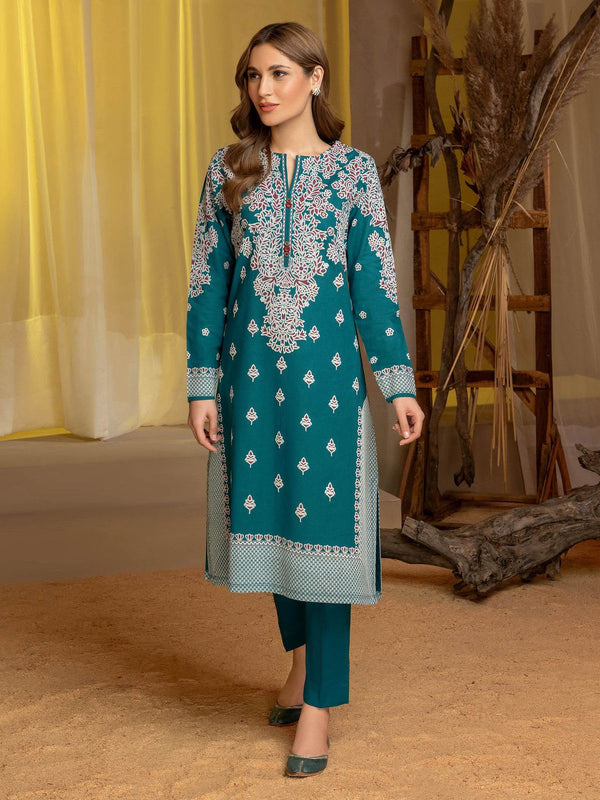
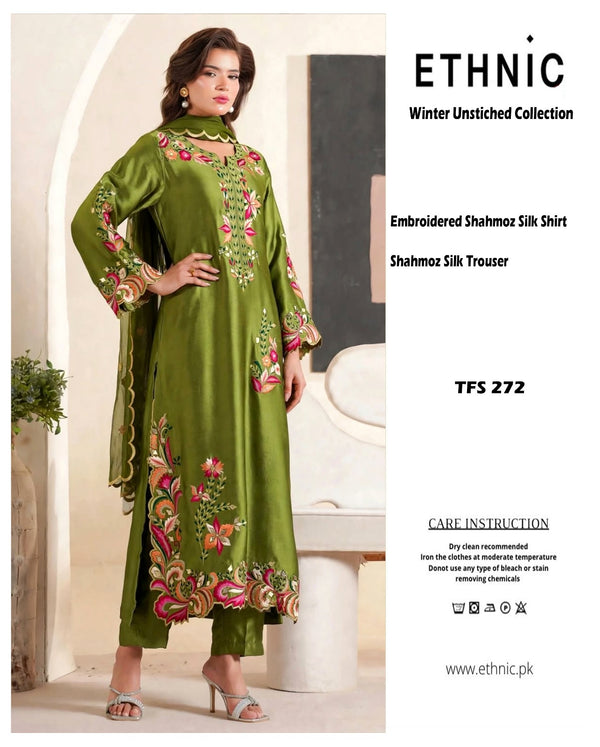
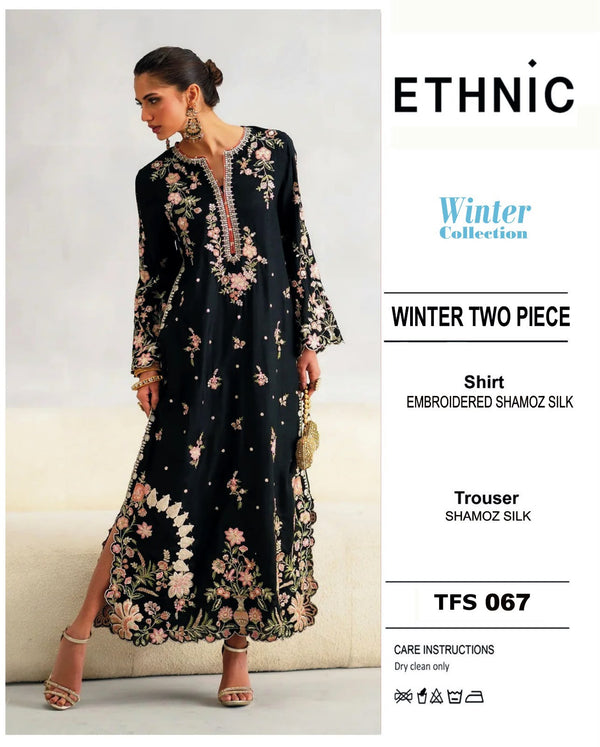
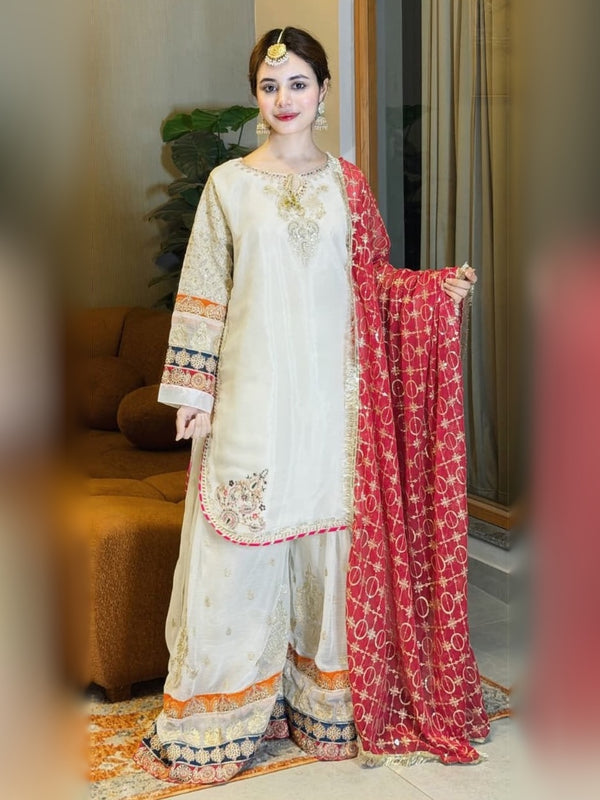
Bela does not currently sell an organza fabric or an organza suit, so the four suits below are not organza. They are silk formal suits, chosen because an organza dupatta pairs beautifully with them: the suit gives a plain, rich base, and the organza dupatta adds the sheer, formal layer on top. Pair any of them with a plain or lightly embroidered organza dupatta in a matching or softly contrasting colour, and you have a complete formal look without a full organza outfit.
Shop formal suits for an organza dupatta
These are silk formal suits, not organza. Pair any of them with a plain or lightly embroidered organza dupatta.
Frequently asked questions
What is organza fabric made of?
Organza fabric is made of fine yarn, tightly twisted and plain-woven, so it is sheer, light, and crisp. Traditionally it is made from silk, which gives a soft shine and good breathability. Today most organza is made from polyester, or a blend, which is stronger and washes more easily, but feels warmer.
Is organza fabric silk or polyester?
Organza can be either, and the label should say which. Silk organza is softer, shinier, more breathable, and more expensive. Polyester organza is crisper, stronger, wrinkles less, and costs less, but it breathes less well. If a seller cannot say what an organza is made of, ask again before you buy.
Is organza fabric good for summer?
Organza can work in summer, but it depends on the fibre and the outfit. Silk organza breathes well and feels cool, so a silk organza dupatta or a lined silk organza shirt suits warm weather. Polyester organza feels warmer, so it is better for an evening event than for a full, hot day out.
What is the difference between organza and chiffon?
Organza and chiffon are both sheer and light, but organza is crisp and holds its shape, while chiffon drapes and flows. An organza dupatta holds a gentle puff and stays where you put it. A chiffon dupatta falls softly over the shoulder. For a structured lehenga skirt, organza is better. For a flowing look, chiffon suits better.
How do I wash organza fabric at home?
Wash silk organza by hand in cold water with a mild soap, press the water through softly, and never wring it hard. Dry it flat in the shade. Polyester organza can go on a gentle machine cycle in cold water, inside a mesh bag. For both kinds, avoid hot water and bleach, and iron on low heat from the back.
Do I need a lining with organza?
Yes, in most cases you need a lining, because a single layer of organza is see-through. A lining in the same colour keeps the outfit soft and even, while a contrasting lining shows through and creates a layered, two-tone look. For a dupatta, no lining is needed, because it is meant to be sheer over a suit.
Is organza fabric comfortable to wear?
Organza is comfortable in small amounts, like a dupatta, a sleeve panel, or a light overlay, and in silk, which breathes well. A full polyester organza outfit can feel warm and stiff on a long, hot day. For comfort, choose silk organza, or wear organza as a dupatta over a soft, plain suit.
Can I wear organza for a wedding?
Yes, organza is a classic wedding fabric, especially for a guest, a sister, or a mother of the bride. A plain or lightly embroidered organza shirt, or an organza dupatta over a silk suit, looks formal without outshining the bride. Keep the jewellery light, and keep the organza as the main piece.
Conclusion
Organza is a sheer, crisp, light fabric that makes a simple outfit look formal, and the key to choosing it well is knowing what it is made of. Silk organza is softer, shinier, and more breathable. Polyester organza is stronger, crisper, and easier to wash. Both hold their shape, both suit weddings and formal wear, and both need a lining, gentle washing, and careful pressing.
Check the weave in the light, feel the crispness, ask for the fibre in plain words, and buy the best organza you can afford for the occasion you have in mind. Then wear it simply, wash it gently, and store it clean and dry, and it will keep its shine for years. Browse Bela's unstitched range for a plain silk suit to pair with your organza dupatta, and let the sheer, crisp layer do the formal work for you.